Prolifération du vivant
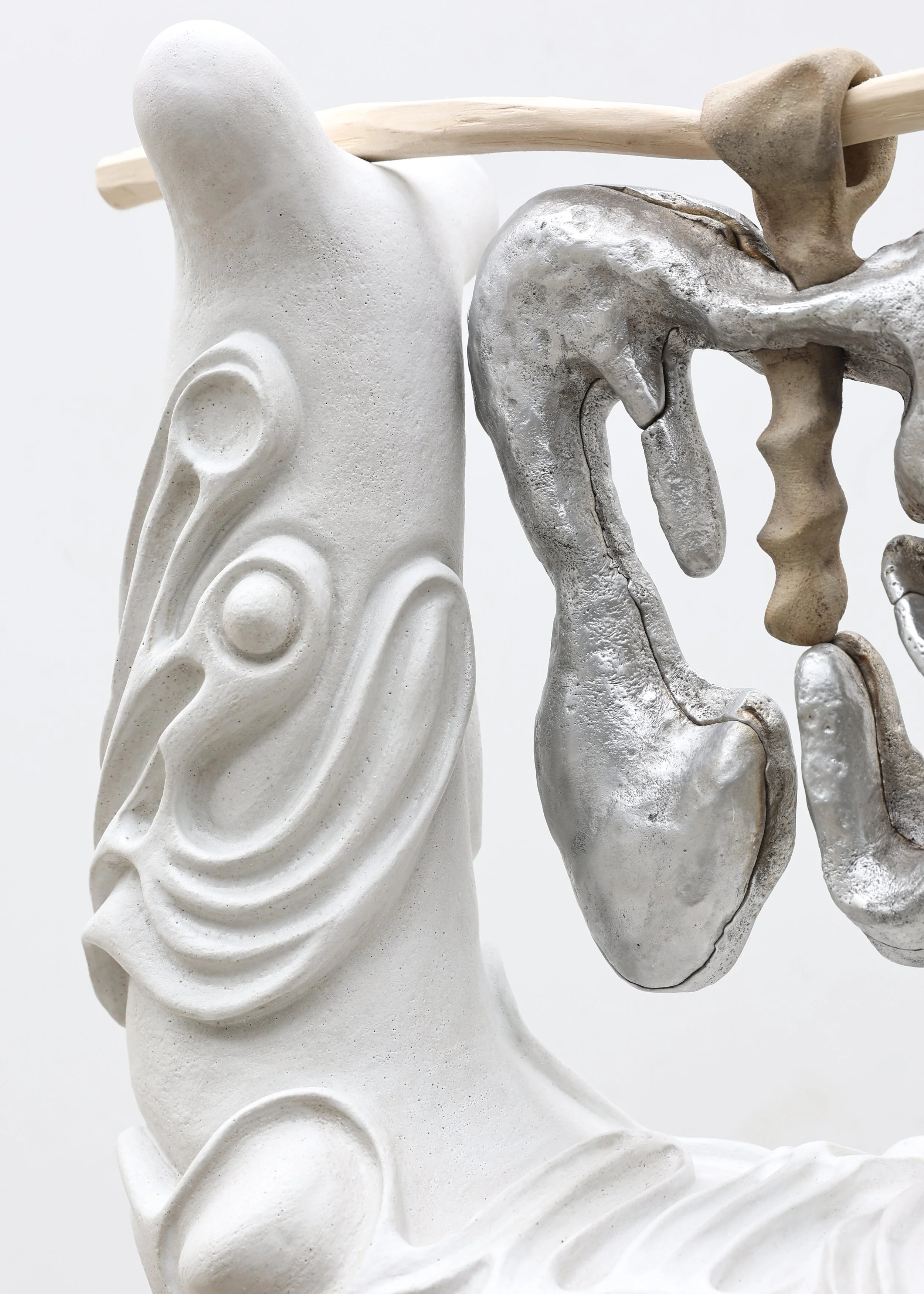
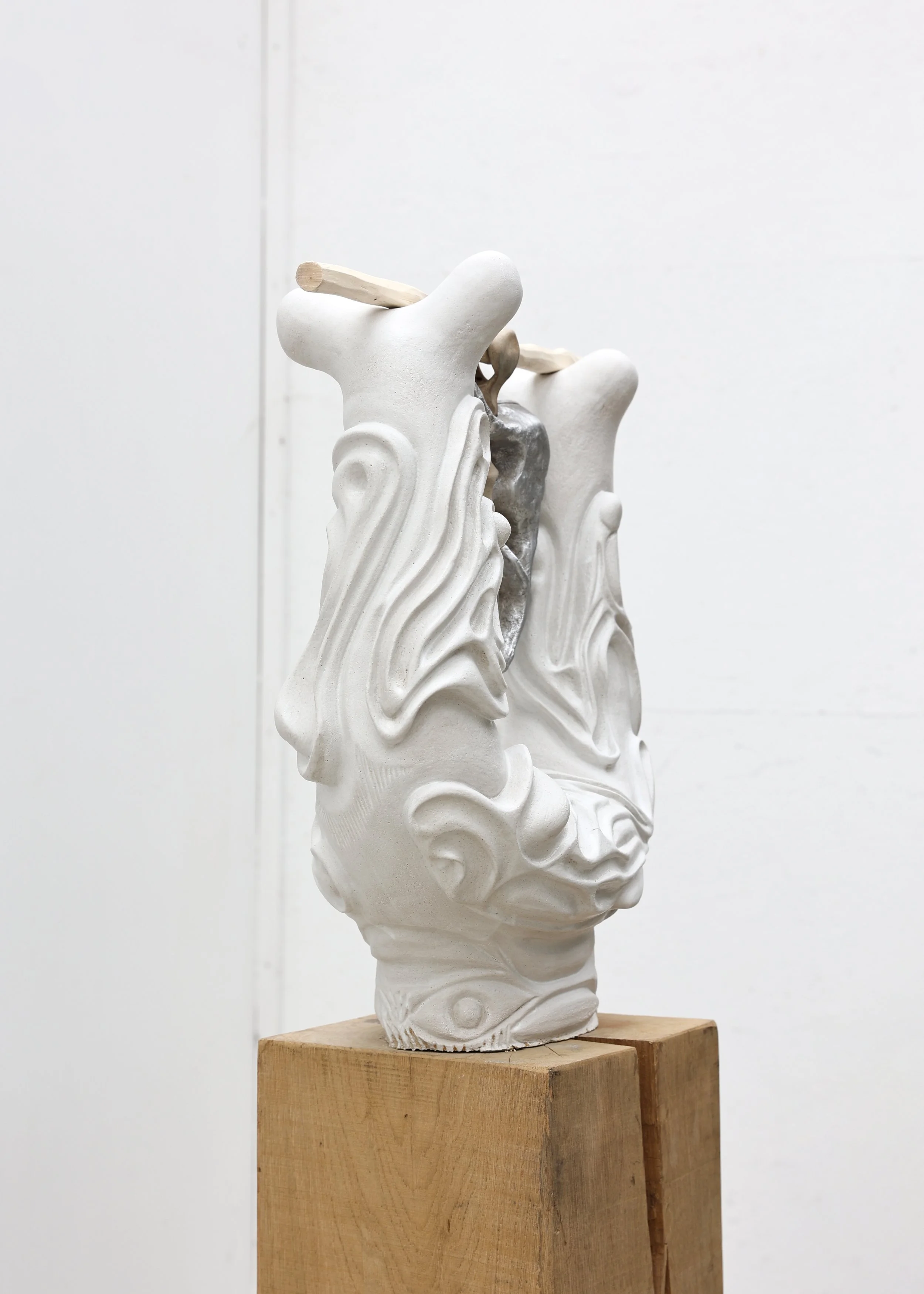
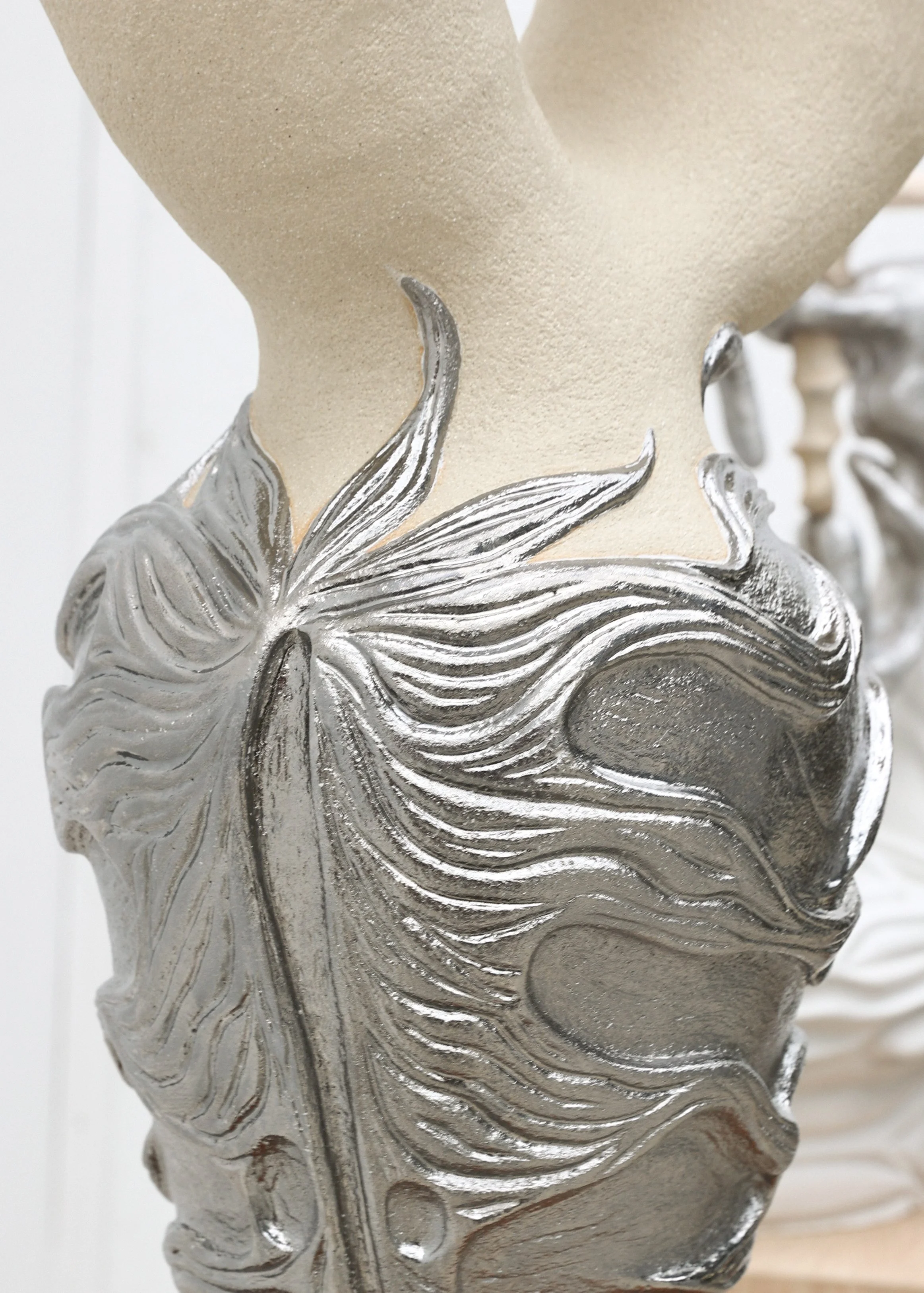

Ramumas 60x50x42cm
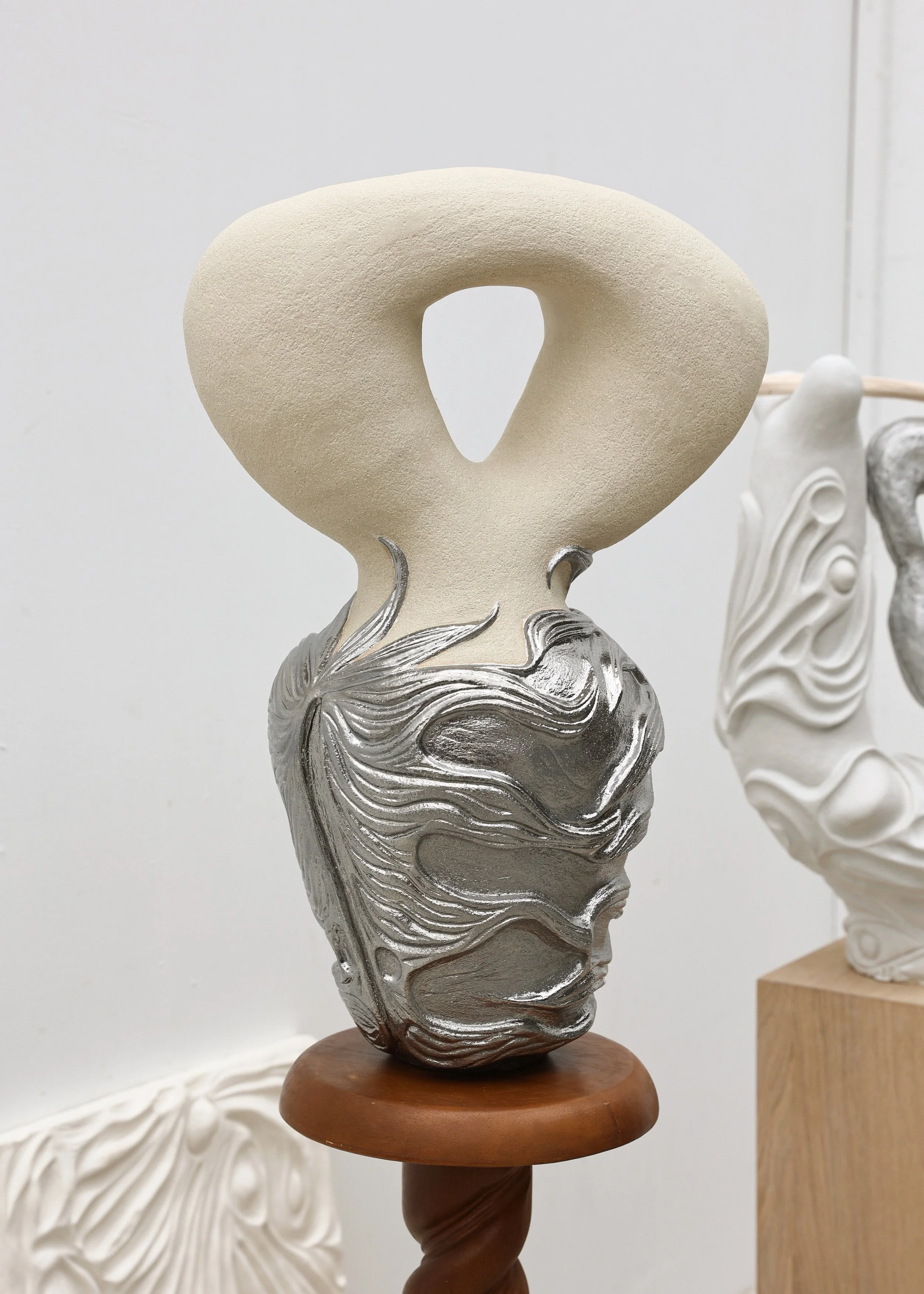
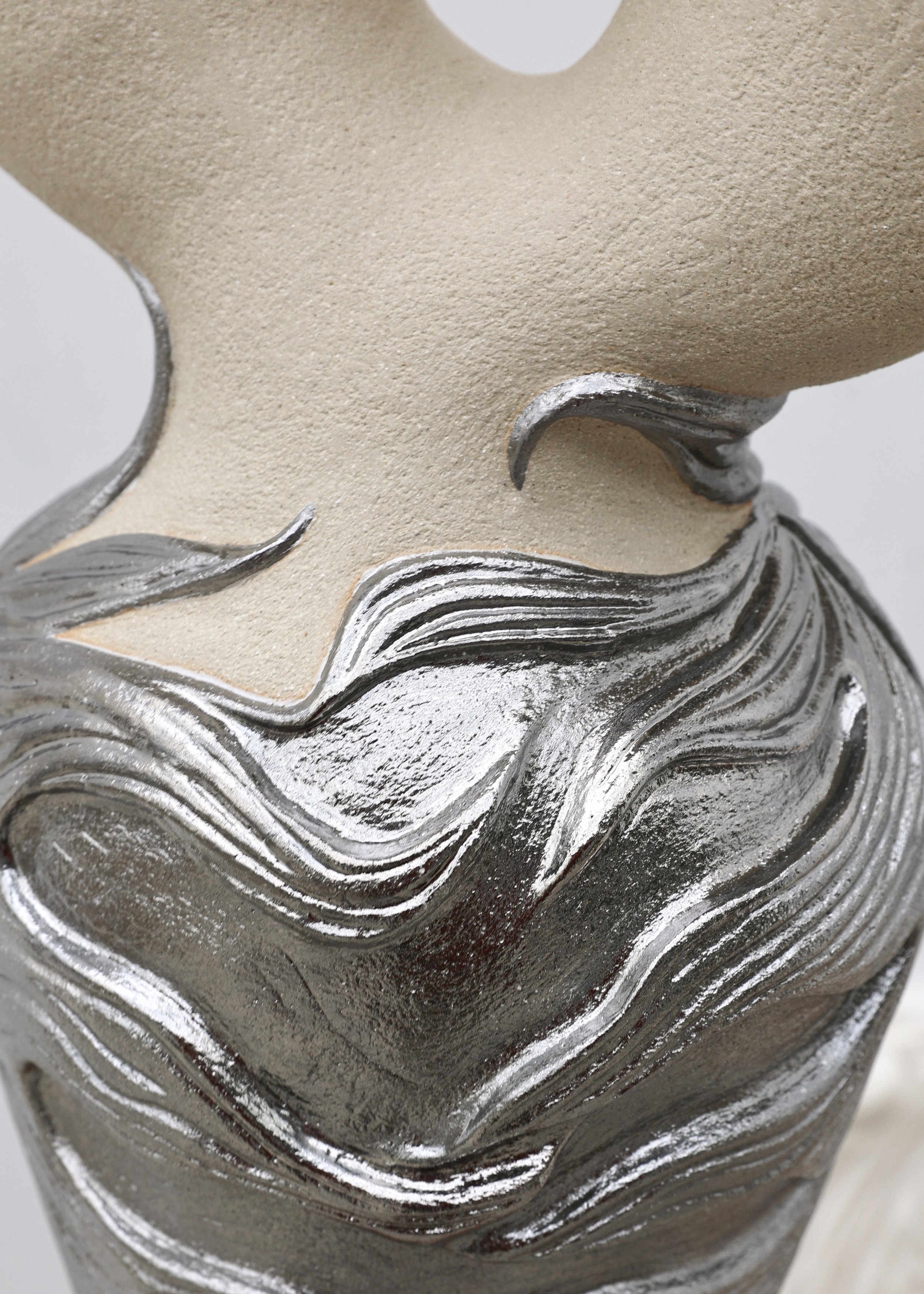
Sklaida 01 50x36x21cm
La série Proliferation du vivant est une ode à l’immobilité et à la contemplation, un état qui conduit à la fusion progressive du corps humain avec son environnement naturel. Mes sculptures relient des fragments du corps à des éléments organiques pour former un tout vivant. Ramumas représente une étape charnière dans l’évolution de ma pratique artistique, où l’intégration de nouvelles techniques et une exploration approfondie des matériaux se rejoignent pour créer une œuvre à la fois intime et universelle.
Bois : Une branche de noisetier, recueillie en montagne, a été choisie pour sa texture brute et organique. Sculptée au couteau, elle conserve les traces naturelles de sa croissance, ainsi que les marques du travail manuel.
Métal : Réalisé en aluminium coulé dans un moule en sable, ce poumon symbolise le souffle vital qui anime toutes les formes de vie. Le contraste entre la densité du métal et la légèreté du concept de respiration crée une tension subtile, mettant en lumière la fragilité et la force de la vie. L’aluminium utilisé pour cette pièce est recyclé, ajoutant une dimension écologique et un lien direct avec le cycle de transformation de la matière.
Le poumon est suspendu par une pièce en grès conçue pour jouer un rôle clé dans la structure globale de l’œuvre. Cet élément en grès, à la fois fonctionnel et symbolique, sert de point d’ancrage à la branche de bois, évoquant visuellement les os d’une cage thoracique. Il renforce l’idée d’une relation symbiotique entre le corps humain et son environnement naturel, où chaque élément est intrinsèquement lié à l’autre.
Argile : Le grès façonné à la main est utilisé pour créer des formes libres, symbolisant le lien profond et ancestral entre l’humanité et la terre. Pour construire la pièce, j’utilise la technique traditionnelle du colombin, une méthode ancienne qui consiste à superposer des boudins d’argile pour former la structure. Après quelques jours de séchage, je commence à créer des reliefs en surface, suivis d’une nouvelle période de séchage. Je viens ensuite sculpter délicatement ces reliefs afin d’accentuer les contrastes entre creux et volumes, en jouant subtilement avec l’interaction entre ombre et lumière.
L’esthétique de Ramumas est profondément ancrée dans des références naturelles, avec des formes organiques inspirées par les ondulations de l’eau et les rides du sable. Cependant, cette œuvre possède également une dimension ornementale, puisant dans l’architecture romaine, ce qui évoque un dialogue entre la nature vivante et les structures façonnées par l’homme, en faisant un artefact. Cette fusion harmonieuse de ces deux mondes crée une confrontation visuelle qui invite le spectateur à réfléchir à la relation entre civilisation et nature.
Les courbes sculptées et les textures brutes interagissent, créant un espace contemplatif où chaque élément porte la trace de son processus de création, de la main de l’artisan à l’influence des forces naturelles. Ramumas invite ainsi à une immersion dans l’harmonie fragile entre l’humanité et son environnement.
ENG : The Proliferation of Life series is an ode to stillness and contemplation—a state that leads to the gradual merging of the human body with its natural environment. My sculptures connect fragments of the body with organic elements to form a living whole. Ramumas marks a pivotal stage in the evolution of my artistic practice, bringing together new techniques and an in-depth exploration of materials to create a work that is both intimate and universal.
Wood: A hazel branch, gathered in the mountains, was chosen for its raw, organic texture. Carved with a knife, it retains the natural traces of its growth alongside the marks of the hand that shaped it.
Metal: Cast in aluminium using a sand mould, the lung symbolises the vital breath that animates all forms of life. The contrast between the density of the metal and the weightlessness associated with breathing creates a subtle tension, highlighting both the fragility and resilience of life. The aluminium used for this piece is recycled, introducing an ecological dimension and establishing a direct connection with the cyclical transformation of matter.
The lung is suspended from a stoneware element designed to play a key role in the overall structure of the work. Both functional and symbolic, this ceramic component anchors the wooden branch while visually evoking the bones of a rib cage. It reinforces the idea of a symbiotic relationship between the human body and its natural environment, in which each element is intrinsically connected to the others.
Clay: Hand-built stoneware is used to create free-form shapes that evoke the deep, ancestral connection between humankind and the earth. I construct the piece using the traditional coiling technique, an ancient method in which coils of clay are layered to build the structure. After several days of drying, I begin developing reliefs across the surface, followed by another period of drying. These reliefs are then carefully carved to heighten the contrast between recesses and volumes, subtly playing with the interaction of light and shadow.
The aesthetics of Ramumas are deeply rooted in the natural world, with organic forms inspired by the rippling of water and patterns traced across sand. At the same time, the work incorporates an ornamental dimension drawn from Roman architecture, establishing a dialogue between living nature and human-made structures and giving the sculpture the quality of an artefact. The convergence of these two worlds creates a visual tension that invites the viewer to reflect on the relationship between civilisation and nature.
Sculpted curves and raw textures interact to create a contemplative space in which each element bears the traces of its making, from the artist’s hand to the influence of natural forces. Ramumas thus invites the viewer to immerse themselves in the fragile harmony between humankind and its environment.